
Local SEO Strategies for Dentists to Attract New Patients
Being easy to find is the first step to standing out in a crowded local market. This guide explains why local SEO matters for dental practices and gives practical, actionable steps to increase visibility and bring more patients through your door. Many offices miss opportunities because they don’t appear for local searches — but with focused local SEO strategies, you can connect with people in your neighborhood. We’ll cover the must-dos: optimizing your Google Business Profile, managing reviews, and using marketing tactics that turn local searches into bookings.
Why Is Local SEO Essential for Dental Practices?
Local SEO determines whether potential patients discover your practice when they search for care nearby. With more searches happening on mobile devices and many queries meant to find local options, strong local SEO helps your practice appear where it counts. Research shows 46% of all Google searches have local intent — that’s a significant pool of potential patients looking for services near them.
Beyond visibility, local SEO delivers more qualified leads. When your listings, website, and reviews are optimized, you reach people actively searching for care and make it simple for them to choose your practice.
At Minerva Digital Marketing Consultants, we focus on affordable local SEO services tailored to dental practices so busy teams can attract more patients without overcomplicating their marketing.
How Does Local Search Influence Dental Patient Acquisition?
Local search connects people looking for dental care with practices in their area. Searchers often type phrases like “dentist near me” or “family dentist in [city],” so optimizing for those queries matters. When your practice shows up for local searches, you capture patients who are ready to book.
Studies show 78% of mobile local searches lead to an offline purchase or visit — a clear reminder that local visibility drives real office traffic. Knowing how patients search helps you shape marketing that meets them where they are.
What Are the Key Benefits of Local SEO for Dentists?
- Increased Visibility: Appear higher in local results so patients can find you quickly.
- Higher Patient Engagement: Improved listings and localized content drive more calls, clicks, and bookings.
- Cost-Effective Marketing: Local SEO targets people actively searching for care, often at a lower cost than broad advertising.
Together, these benefits strengthen patient acquisition and support steady growth within your local market.
How to Optimize Your Google Business Profile for Dentists
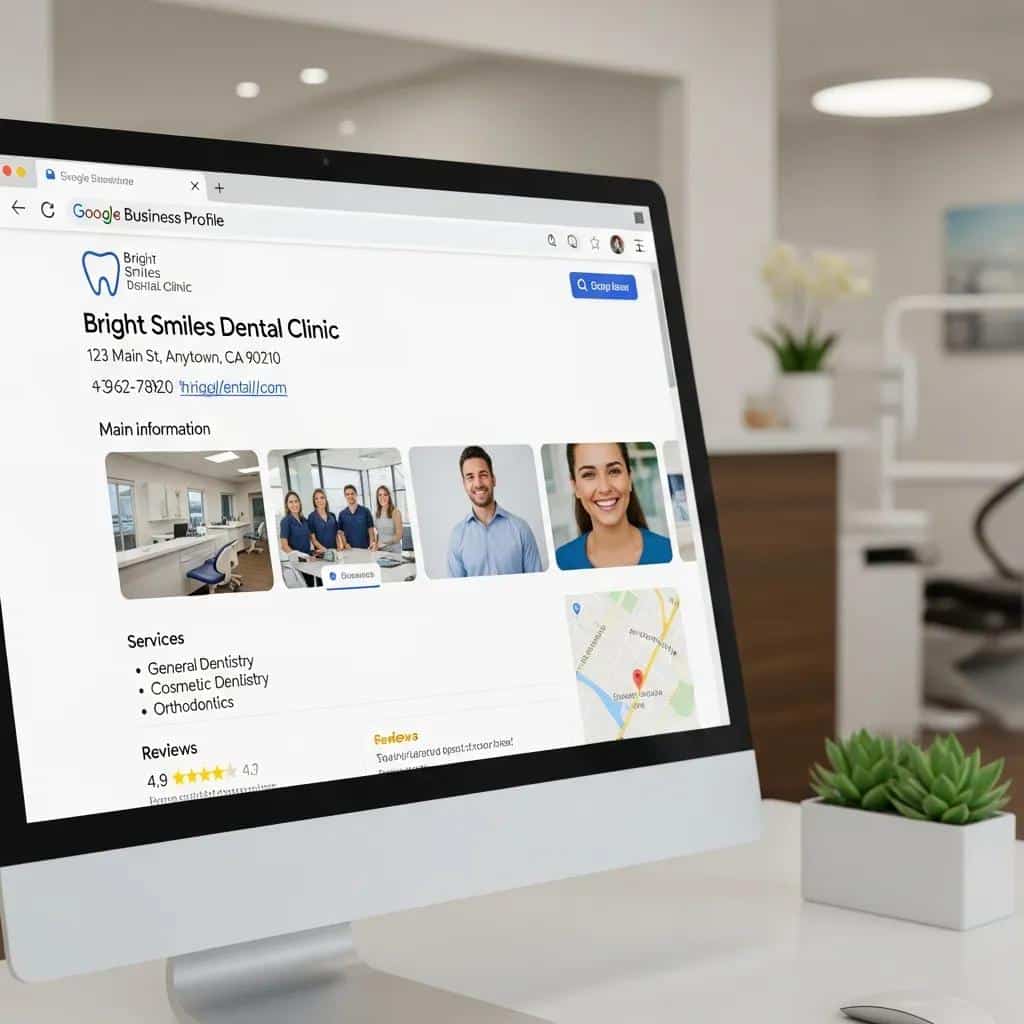
Your Google Business Profile (GBP) is often the first thing prospective patients see. A complete, accurate profile improves local rankings and makes it easy for people to contact or visit your office.
What Steps Are Involved in Claiming and Verifying Your Dental Practice GBP?
Claiming and verifying your GBP is straightforward but essential. Follow these steps:
- Create or Claim Your Listing: Visit the Google Business Profile site and set up or claim your practice listing.
- Verify Your Business: Google will mail a verification code to your practice address — enter it to confirm ownership.
- Complete Your Profile: Add your practice name, address, phone number, hours, and offered services so searchers see accurate details.
Verification builds trust and gives you control over how your practice appears in search and on Maps.
How to Enhance Your GBP Listing with Accurate NAP, Categories, and Photos?
Keep your Name, Address, and Phone number (NAP) consistent across all listings — inconsistencies confuse search engines and patients. Choose the most relevant categories so Google correctly understands your services.
High-quality photos of your team, exam rooms, and patient interactions help, too. Businesses with photos get 42% more requests for directions and 35% more website click-throughs — small investments that deliver measurable returns.
How Can Dental Practices Manage and Leverage Online Reviews Effectively?

Online reviews strongly influence patient decisions. A steady stream of genuine reviews — plus thoughtful responses to concerns — builds trust and improves how your practice appears in local search.
What Are Best Practices for Generating Positive Dental Patient Reviews?
Try these simple, repeatable habits to encourage reviews:
- Ask for Feedback: After a positive visit, invite patients to share their experience on GBP or other review sites.
- Make It Easy: Send direct review links in follow-up emails or texts so leaving feedback takes one or two clicks.
- Timing Matters: Request reviews soon after treatment while the experience is fresh.
Consistent, authentic reviews give future patients confidence and support better local rankings.
How Should Dentists Respond to Positive and Negative Reviews?
Replying shows you care. For positive reviews, thank the patient and reinforce your availability. For negative feedback, acknowledge the concern, apologize when appropriate, and invite the reviewer to resolve the issue offline. Professional, timely replies demonstrate responsiveness and help protect your reputation.
What Are the Best Dental Website SEO Strategies to Attract Local Patients?
Your website should clearly communicate what you do and where you serve. Combine technical SEO with local content to capture relevant search traffic and make it easy for patients to take the next step.
How to Conduct Local Keyword Research for Dental Services?
Identify the phrases local patients actually use — tools like Google Keyword Planner and SEMrush help. Focus on long-tail, location-specific queries like “pediatric dentist in [city]” or “emergency dental care [city]” to attract high-intent visitors.
How to Create Location-Specific Content and Optimize On-Page SEO for Dentists?
Create content that speaks to your community: local dental tips, sponsorships, or case studies featuring nearby patients. Optimize title tags, meta descriptions, and headers with local keywords so search engines and people clearly understand your focus. See our on-page SEO guide for practical steps.
Which Advanced Marketing Strategies Can Boost Dental Patient Acquisition?
Beyond local SEO, other tactics can amplify reach and improve conversion rates.
How Can Social Media Marketing Enhance Your Dental Practice Visibility?
Social channels let you share patient stories, educational content, and clinic updates. Regular posting and community engagement increase awareness and trust — and social traffic can drive people back to your website and GBP.
What Role Do Paid Advertising and Video Marketing Play in Dental SEO?
Targeted paid ads (like Google Ads) can fill gaps while your organic presence grows, especially for urgent services or promotions. Video lets you introduce your team, explain procedures, and answer common patient questions — content that builds trust and improves on-page engagement.
| Strategy | Mechanism | Benefit | Impact Level |
|---|---|---|---|
| Google Business Profile Optimization | Accurate NAP and categories | Improved local visibility | High |
| Online Review Management | Engaging with patient feedback | Enhanced reputation | High |
| Local Keyword Research | Targeting specific search terms | Increased website traffic | Medium |
These strategies work together to strengthen your local footprint and help your practice appear for the patients who need you most.
- Increased Visibility: Local SEO raises your profile in search results so potential patients can find you faster.
- Higher Patient Engagement: Optimized listings and relevant content drive more calls, directions requests, and appointment bookings.
- Cost-Effective Marketing: Local SEO targets people already searching for care, often delivering a better return than broad advertising.
Together, these tactics provide a reliable foundation for growing patient volume and building a stronger local reputation.
Frequently Asked Questions
What are the best local SEO tools for dentists?
Several tools can enhance local SEO efforts for dental practices. Google My Business is essential for managing your online presence. Additionally, tools like Moz Local and BrightLocal help track local listings and citations. For keyword research, SEMrush and Ahrefs are excellent for identifying local search terms. Finally, reputation management tools like BirdEye or Podium can assist in monitoring and responding to online reviews, ensuring your practice maintains a positive image in local searches.
How can dentists improve their website's local SEO?
Improving local SEO on your website involves several strategies. Start by ensuring your site is mobile-friendly and has fast loading times. Incorporate local keywords naturally into your content, including service pages and blog posts. Create location-specific landing pages if you serve multiple areas. Additionally, include structured data markup to help search engines understand your content better. Regularly updating your blog with local news or dental tips can also enhance relevance and engagement.
What is the impact of online reviews on local SEO rankings?
Online reviews significantly impact local SEO rankings. Search engines like Google consider the quantity and quality of reviews when determining local search results. Positive reviews enhance your practice’s credibility and can improve visibility in local searches. Additionally, responding to reviews, both positive and negative, shows engagement and can influence potential patients’ decisions. A consistent stream of fresh reviews signals to search engines that your practice is active and trustworthy, further boosting your local SEO efforts.
How can dentists use content marketing to support local SEO?
Content marketing can effectively support local SEO by creating valuable, relevant content that resonates with your community. Consider writing blog posts about local dental health issues, sharing patient success stories, or providing tips for maintaining oral hygiene. Engaging with local events or sponsorships can also generate content opportunities. By optimizing this content with local keywords and promoting it through social media, you can increase visibility and attract more local patients to your practice.
What are the advantages of using Google Ads alongside local SEO?
Using Google Ads in conjunction with local SEO can provide immediate visibility while your organic rankings improve. Ads can target specific demographics and geographic areas, ensuring your practice reaches potential patients actively searching for dental services. This dual approach allows for a comprehensive marketing strategy, where ads can promote special offers or services while organic SEO builds long-term credibility. Together, they can enhance patient acquisition and maximize your practice’s online presence.
How can dentists ensure their practice appears in local search results?
To ensure your practice appears in local search results, start by optimizing your Google Business Profile with accurate information, including your NAP (Name, Address, Phone number). Use local keywords throughout your website and create content that addresses community-specific dental needs. Encourage satisfied patients to leave positive reviews, as these can boost your visibility. Additionally, ensure your website is mobile-friendly and fast-loading, as these factors influence search rankings significantly.
What are the common mistakes dentists make in local SEO?
Common errors include not claiming or fully optimizing the Google Business Profile, inconsistent NAP across listings, and ignoring reviews. Practices also often skip local keyword research and fail to publish location-focused content — all of which reduce visibility in local searches.
How can dentists track the effectiveness of their local SEO efforts?
Use Google Analytics and Google Search Console to monitor traffic, search queries, and on-site behavior. Track metrics like organic visits, click-through rates, and conversions (calls or appointment requests). Also monitor review volume and referral sources for qualitative signals of local traction.
What role does mobile optimization play in local SEO for dentists?
Mobile readiness is critical: many local searches happen on smartphones. A responsive site with fast load times and clear call-to-action buttons makes it easy for patients to call, get directions, or book — and Google favors mobile-friendly sites in rankings.
How often should dentists update their Google Business Profile?
Keep your GBP current and active. Update hours, services, photos, and posts as changes occur — and aim for at least a monthly review to ensure accuracy and show Google your listing is maintained.
What are the benefits of using social media for local SEO?
Social media builds awareness, fosters community relationships, and funnels traffic to your site and GBP. While social signals are indirect ranking factors, the visibility and engagement you gain support local discovery and patient trust.
How can dentists leverage video marketing for patient acquisition?
Create short, helpful videos about common procedures, patient testimonials, and practice introductions. Post them on YouTube and social channels, and embed videos on your site to boost engagement — video content builds credibility and helps convert searchers into patients.
Conclusion
Local SEO is one of the most effective, sustainable ways to attract new patients. By optimizing your Google Business Profile, nurturing reviews, and using local keywords and content, your practice becomes easier to find and more compelling to prospective patients. Start with these practical steps and refine your approach over time — small, consistent improvements add up to steady growth.